






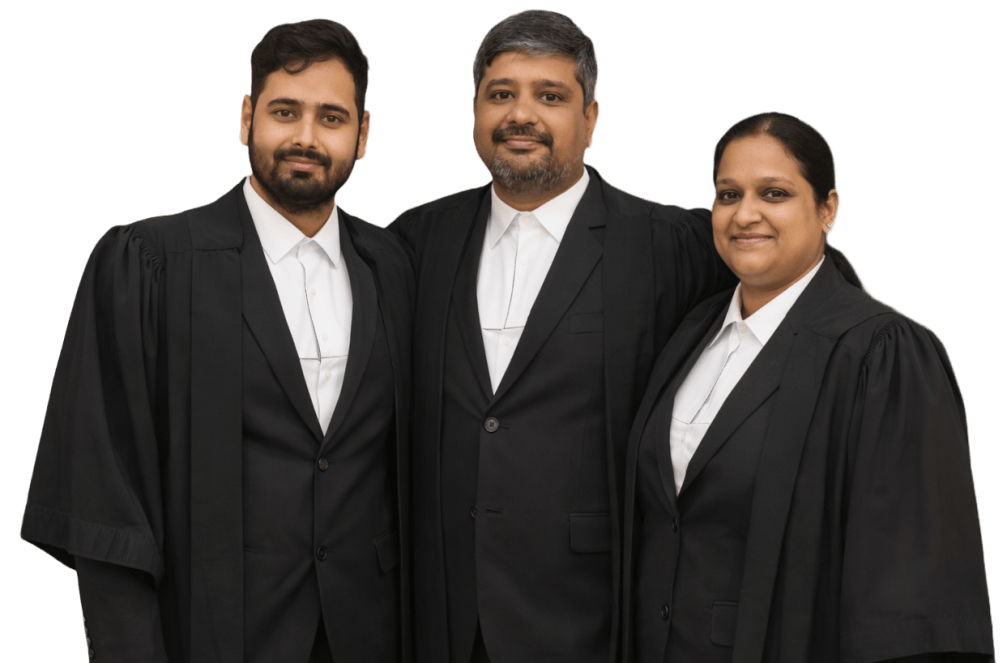


Best Divorce Lawyer in Karkardooma Court: A Complete Guide by Apolegal
Looking for the best divorce lawyer in Karkardooma Court can feel overwhelming, especially when you’re already dealing with the emotional weight of a marriage breaking down. Between confusing legal terminology, endless paperwork, and the stress of court dates, most people going through a divorce in East Delhi simply don’t know where to start. If you’ve been searching for “divorce lawyer near Karkardooma Court” or “best matrimonial advocate in East Delhi,” you’ve landed in the right place. This guide from Apolegal walks you through everything you need to know — from understanding how Karkardooma Court handles divorce cases, to choosing the right lawyer, to what the entire process actually looks like from start to finish.
Karkardooma Court, officially known as the East District Courts Complex, is one of Delhi’s busiest judicial complexes and handles a significant volume of matrimonial and family law matters for residents of East Delhi, including areas like Anand Vihar, Preet Vihar, Vivek Vihar, Mayur Vihar, Shahdara, Dilshad Garden, Karkardooma, and surrounding localities. Because family courts here deal with such a high caseload, having a lawyer who understands the local court’s procedures, the judges’ expectations, and the administrative rhythm of the complex can make a real difference in how smoothly your case moves forward.
Why Location Matters When Choosing a Divorce Lawyer
Many people assume that any divorce lawyer will do, regardless of where they practice. In reality, choosing a lawyer who regularly appears before Karkardooma Court offers several practical advantages that can directly affect your case’s timeline and outcome.
Familiarity with local court procedures. Every district court complex in Delhi has its own administrative quirks — filing procedures, listing patterns, mediation center protocols, and even how certain judges prefer submissions to be formatted. A lawyer who practices regularly at Karkardooma Court already knows these nuances and won’t waste time (or your money) figuring them out.
Established relationships within the ecosystem. Divorce cases, especially mutual consent divorces, often move through court-annexed mediation centers before reaching a judge. Lawyers who frequently work within the Karkardooma Court complex tend to have a working familiarity with the mediation centers, court staff, and the general flow of matters, which can help avoid unnecessary delays.
Convenience for hearings and documentation. Divorce proceedings usually require multiple hearings, document submissions, and sometimes urgent filings. A lawyer based near or regularly practicing at Karkardooma Court can respond faster to hearing dates, last-minute requirements, or emergency applications compared to someone commuting from across the city.
Jurisdictional accuracy. Filing a divorce petition in the correct jurisdiction is a legal requirement, not a preference. Karkardooma Court has jurisdiction over matters where the marriage was solemnized within its territorial limits, where the couple last resided together, or where the respondent currently resides (among other jurisdictional grounds under the Hindu Marriage Act, 1955, and other applicable personal laws). A lawyer well-versed in East Delhi’s jurisdictional boundaries can ensure your petition is filed correctly the first time, avoiding rejection or unnecessary transfer applications.
Types of Divorce Cases Handled at Karkardooma Court
Karkardooma Court’s family court division deals with a wide range of matrimonial matters. Understanding which category your situation falls into helps you have a more productive first conversation with your lawyer.
Mutual Consent Divorce
This is the most straightforward and least adversarial route, available when both spouses agree to end the marriage and have reached consensus on issues like alimony, child custody, and division of assets. Under Section 13B of the Hindu Marriage Act, the process typically involves two motions filed with a mandatory cooling-off period in between (though courts have discretion to waive this period in appropriate cases). A good divorce lawyer will help draft the settlement terms carefully so both parties are protected and the case moves through court efficiently.
Contested Divorce
When spouses disagree on either the decision to divorce or on ancillary issues like custody, maintenance, or property, the matter becomes a contested divorce. These cases are heard on grounds such as cruelty, desertion, adultery, mental disorder, or other statutory grounds depending on the applicable personal law (Hindu Marriage Act, Special Marriage Act, Muslim Personal Law, Christian Marriage Act, or the Parsi Marriage and Divorce Act). Contested cases require detailed evidence, witness examination, and often take significantly longer than mutual consent matters — sometimes spanning several years depending on complexity.
Maintenance and Alimony Disputes
Whether filed independently under Section 125 of the CrPC (now Section 144 of the BNSS), the Hindu Adoption and Maintenance Act, or as part of a larger divorce proceeding, maintenance disputes are common at Karkardooma Court. An experienced lawyer will know how to calculate reasonable maintenance based on income, lifestyle, and dependents, and how to present or contest such claims effectively.
Child Custody Matters
Custody disputes are among the most emotionally charged aspects of divorce proceedings. Karkardooma Court’s family bench handles custody applications with the child’s welfare as the paramount consideration. Lawyers experienced in this domain understand how to build a case around the child’s best interests, whether seeking sole custody, joint custody, or visitation rights.
Domestic Violence and Protection Orders
Cases filed under the Protection of Women from Domestic Violence Act, 2005, often run parallel to divorce proceedings. A lawyer familiar with both matrimonial and protection law can coordinate these overlapping matters more effectively than someone handling only one area.
Restitution of Conjugal Rights and Judicial Separation
Less common but still relevant, these proceedings allow a spouse to seek either the resumption of marital cohabitation or a formal separation without dissolving the marriage entirely. Both require nuanced legal strategy depending on family circumstances.
What Makes a Divorce Lawyer “the Best” for Your Case
The idea of a single “best” divorce lawyer is somewhat misleading — the right lawyer for you depends on your specific circumstances, the complexity of your case, and your personal comfort level working with them. That said, certain qualities consistently separate excellent matrimonial lawyers from average ones.
1. Specialization in Family and Matrimonial Law
Divorce law is a specialized field with its own procedural rhythms, precedents, and sensitivities. A lawyer who practices general civil or criminal law occasionally taking up divorce cases is unlikely to have the depth of experience that a dedicated matrimonial law practitioner brings. Look for lawyers or firms — like Apolegal — that focus specifically on family law, matrimonial disputes, and related areas such as custody and maintenance.
2. Strong Track Record at Karkardooma Court Specifically
Ask any potential lawyer how many cases they’ve handled specifically at Karkardooma Court. Experience at other Delhi courts is valuable, but familiarity with this particular complex’s judges, mediation centers, and administrative staff adds an extra layer of efficiency.
3. Clear, Transparent Communication
Divorce is stressful enough without a lawyer who is difficult to reach or vague about case updates. The best lawyers explain legal concepts in plain language, set realistic expectations about timelines, and respond to client queries promptly.
4. Empathy Combined with Objectivity
A good divorce lawyer understands that clients are going through one of the most difficult periods of their lives, but doesn’t let emotion cloud strategic legal judgment. The best professionals strike a balance between compassionate support and clear-eyed legal advice.
5. Negotiation Skills
Even in contested matters, a significant number of divorce cases eventually settle through negotiation rather than a full trial. Lawyers with strong negotiation skills can often secure better outcomes for their clients faster and with less financial and emotional cost than prolonged litigation.
6. Transparent Fee Structure
Legal fees for divorce cases can vary widely based on case complexity, whether it’s mutual or contested, and the number of hearings required. The best lawyers are upfront about their fee structure from the outset, avoiding hidden costs that can add financial stress to an already difficult situation.
7. Access to a Broader Support Network
Divorce cases sometimes require inputs from forensic accountants, child psychologists, property valuers, or mediators. Established law firms with a broader professional network — like Apolegal — can bring in the right specialists when needed, rather than leaving clients to source these resources independently.
The Divorce Process at Karkardooma Court: Step by Step
Understanding the general flow of a divorce case can help reduce anxiety and set realistic expectations. While every case is different, here’s a general roadmap for what to expect.
Step 1: Initial Consultation and Case Assessment. Your lawyer will review your marital history, the grounds for divorce (or mutual consent), financial details, and any custody considerations to determine the appropriate legal strategy.
Step 2: Drafting and Filing the Petition. For mutual consent cases, both parties’ terms are documented in a settlement agreement, and a joint petition is filed. For contested cases, the petitioner’s lawyer drafts a detailed petition outlining the grounds for divorce, supported by relevant facts and, where applicable, evidence.
Step 3: Court Registration and First Hearing. Once filed, the case is registered and assigned to a specific family court judge at Karkardooma Court. The first hearing typically involves procedural matters, including scheduling for statement recording (in mutual consent cases) or issuing notice to the respondent (in contested cases).
Step 4: Mediation (Where Applicable). Many matrimonial matters are referred to the court-annexed mediation center before proceeding further, particularly in cases where there’s a possibility of reconciliation or amicable settlement of ancillary issues.
Step 5: Statement Recording or Evidence Stage. In mutual consent divorces, both parties record statements before the judge affirming their consent (typically across two motions, with a cooling-off period between them, unless waived). In contested cases, this stage involves detailed evidence, cross-examination, and witness testimony, which can extend over multiple hearings.
Step 6: Final Arguments and Judgment. Once evidence and arguments are complete, the court passes its final judgment, which may grant the divorce, deny it, or address ancillary matters like maintenance and custody as part of the decree.
Step 7: Decree and Post-Divorce Formalities. Once the divorce decree is issued, there may be follow-up formalities such as updating official documents, executing settlement terms, or, in some cases, filing an appeal if either party is dissatisfied with the outcome.
Grounds for Divorce Recognized Under Indian Law
Understanding the legal grounds available to you helps set realistic expectations before you even walk into a lawyer’s office. The specific grounds vary depending on which personal law applies to your marriage, but several grounds are common across most statutes.
Cruelty. This includes both physical and mental cruelty, and courts have increasingly recognized sustained emotional abuse, humiliation, and harassment as valid grounds, not just physical violence.
Desertion. If a spouse has abandoned the marriage without reasonable cause for a continuous period (typically two years under most personal laws), this can serve as grounds for divorce.
Adultery. Voluntary sexual relations outside the marriage remain a recognized ground for divorce under most Indian matrimonial statutes.
Mental disorder. Where a spouse suffers from a mental disorder of a kind and degree that makes it unreasonable to expect the other spouse to continue living with them, this can be cited as grounds, subject to medical evidence.
Conversion. If one spouse converts to another religion, this is recognized as a valid ground for divorce under several personal laws, including the Hindu Marriage Act.
Irretrievable breakdown of marriage. While not yet codified as an independent statutory ground under the Hindu Marriage Act, courts — including the Supreme Court — have exercised discretion in certain cases to grant divorce on this basis, particularly where reconciliation is clearly impossible and prolonging the marriage serves no purpose.
Mutual consent. As discussed earlier, when both spouses agree the marriage cannot continue, this is by far the fastest and least contentious route available.
Your lawyer will assess which grounds are applicable and strongest given your specific circumstances, and will advise on the evidence needed to substantiate a contested claim, should that route become necessary.
How to Prepare for Your First Meeting With a Divorce Lawyer
Walking into your first consultation prepared can help your lawyer give you more accurate, useful advice right from the start, and can also save you time and consultation fees.
Write down a timeline of key events. Include your marriage date, when issues began, any significant incidents relevant to your grounds for divorce, and any prior attempts at reconciliation or counseling.
Gather financial documents. Bring salary slips, bank statements, property documents, and details of joint assets or debts. This helps your lawyer assess potential maintenance or asset division outcomes early on.
List your priorities clearly. Are you most concerned about child custody, minimizing conflict, protecting specific assets, or simply getting through the process as quickly as possible? Being clear about your priorities helps your lawyer tailor their strategy accordingly.
Note any existing legal correspondence. If you’ve already sent or received legal notices, filed police complaints, or have documentation from prior counseling or mediation attempts, bring copies.
Prepare your questions. Common questions worth asking include the lawyer’s experience at Karkardooma Court specifically, an estimated timeline for your type of case, their fee structure, and how they typically communicate case updates.
Be honest about difficult details. Lawyers can only build an effective strategy with complete information. Withholding uncomfortable facts, even if embarrassing, often backfires later when they surface unexpectedly during proceedings.
Cost Factors to Understand Before You Begin
Divorce-related legal costs in Delhi can vary widely, and understanding what drives these costs can help you budget realistically and avoid unpleasant surprises.
Case type. Mutual consent cases typically involve lower legal fees due to fewer hearings and reduced complexity compared to contested matters.
Number of hearings. Contested cases involving extensive evidence, cross-examination, and multiple ancillary applications (custody, maintenance, injunctions) naturally accumulate higher costs over time.
Court fees and incidental expenses. Beyond lawyer’s fees, there are nominal court filing fees, costs for certified copies of documents, and potentially fees for expert witnesses or valuers in complex asset division cases.
Mediation costs. If your case is referred to the court-annexed mediation center, there may be nominal charges associated with the mediation process itself, separate from your lawyer’s fees.
Geographic and firm-specific variation. Fees can vary based on the lawyer’s experience level, the firm’s overall standing, and case complexity. It’s reasonable to request a clear fee estimate during your initial consultation, and reputable firms will provide this without hesitation.
Documents Typically Required for Filing a Divorce
Having your documentation organized before your first consultation can significantly speed up the process. Commonly required documents include:
- Marriage certificate (or proof of marriage where a certificate wasn’t issued)
- Proof of residence for both spouses (Aadhaar card, utility bills, etc.)
- Photographs from the wedding ceremony
- Income proof (salary slips, ITRs, or business documents) for maintenance calculations
- Details of joint or individual assets and liabilities
- Details of children, including birth certificates, if custody is a consideration
- Any prior legal correspondence, notices, or agreements between spouses
- Evidence supporting grounds for divorce, in contested matters
Mutual Consent vs. Contested Divorce: A Quick Comparison
| Factor | Mutual Consent Divorce | Contested Divorce |
|---|---|---|
| Basis | Both spouses agree to divorce and terms | One spouse seeks divorce on legal grounds; other may disagree |
| Typical Timeline | A few months to about a year (cooling-off period may apply) | Can range from one to several years |
| Cost | Generally lower due to fewer hearings | Higher due to prolonged litigation and evidence stages |
| Emotional Strain | Comparatively lower | Often significantly higher |
| Court Appearances | Minimal (two main motions) | Multiple hearings across evidence, arguments, and cross-examination |
| Outcome Certainty | High, since terms are pre-negotiated | Uncertain, depends on evidence and judicial discretion |
| Role of Lawyer | Drafting settlement, ensuring fair terms | Building case strategy, evidence, cross-examination, negotiation |
This comparison is a general guide — the right path for your situation depends on your specific circumstances, and an experienced lawyer can help you evaluate which route makes the most sense.
How Apolegal Supports Clients at Karkardooma Court
At Apolegal, we understand that no two divorce cases are alike. Our approach centers on combining strong legal expertise in matrimonial law with genuine attention to each client’s personal circumstances. Here’s how we support clients navigating divorce proceedings at Karkardooma Court:
Dedicated matrimonial law expertise. Our team focuses specifically on family law matters, including mutual consent and contested divorces, child custody, maintenance, and domestic violence cases, ensuring clients get advice grounded in deep subject-matter familiarity rather than generalist legal knowledge.
Local court familiarity. With regular practice before Karkardooma Court and its family court benches, our lawyers understand the procedural nuances, mediation processes, and administrative requirements specific to this complex, helping avoid unnecessary delays.
Transparent process guidance. From your first consultation, we walk you through what to expect at each stage, so you’re never left guessing about timelines, documentation, or next steps.
Sensitive, client-first approach. We recognize that divorce isn’t just a legal process — it’s a deeply personal transition. Our team combines professional rigor with empathy, ensuring clients feel supported rather than just processed.
Comprehensive support for ancillary matters. Beyond the divorce itself, we assist with maintenance negotiations, child custody arrangements, and asset division, aiming for outcomes that protect our clients’ long-term interests, not just a quick resolution.
Frequently Asked Questions About Divorce Lawyers Near Karkardooma Court
If you’re just beginning your search, you likely have several practical questions. Here are answers to some of the most common ones we hear from clients.
Common Mistakes to Avoid When Choosing a Divorce Lawyer
Even well-intentioned individuals can make choices during a stressful divorce that end up costing them time, money, or a favorable outcome. Being aware of these common pitfalls can help you make a more informed decision.
Choosing based on cost alone. While budget is a legitimate concern, the cheapest lawyer isn’t always the best value. Inexperienced or overburdened lawyers may charge less but end up costing more in the long run through delays, poorly drafted documents, or missed procedural requirements.
Not verifying court-specific experience. As discussed earlier, a lawyer’s general experience doesn’t always translate to efficiency at a specific court complex. Always ask directly about their experience at Karkardooma Court.
Ignoring communication style mismatches. If a lawyer is difficult to reach or doesn’t explain things clearly during your initial consultation, this pattern is unlikely to improve once you’ve formally engaged them. Trust your instincts here.
Rushing into mutual consent without proper settlement terms. Some couples rush toward mutual consent divorce without fully thinking through maintenance, custody, or asset division terms, only to face disputes later. A good lawyer will ensure these terms are comprehensive and fair before filing.
Not asking about total costs upfront. Beyond lawyer’s fees, there can be court fees, documentation costs, and charges for additional services like mediation or expert consultations. Clarify the full cost picture at the outset to avoid surprises.
Final Thoughts
Navigating a divorce is rarely easy, but having the right lawyer by your side can make the legal process significantly more manageable. If you’re searching for a divorce lawyer near Karkardooma Court, prioritize specialization in matrimonial law, proven experience at this specific court complex, transparent communication, and a genuine understanding of your personal circumstances. At Apolegal, our team is committed to guiding clients through every stage of their divorce proceedings — from the first consultation to the final decree — with both legal precision and personal care. If you’d like to discuss your situation and understand your options under Indian matrimonial law, reach out to Apolegal for a consultation tailored to your needs.
FAQs
1. How long does a mutual consent divorce take at Karkardooma Court?
A mutual consent divorce at Karkardooma Court generally takes a few months to about a year, depending on court scheduling and whether the mandatory cooling-off period between the two motions is waived. Factors like how quickly settlement terms are finalized and how promptly both parties appear for statement recording also influence the overall timeline significantly.
2. What is the difference between mutual consent and contested divorce?
In a mutual consent divorce, both spouses agree to separate and have settled terms like maintenance and custody, making the process quicker and less adversarial. A contested divorce arises when one spouse seeks divorce on specific legal grounds while the other disagrees, requiring evidence, hearings, and often a significantly longer timeline to resolve.
3. Can I file for divorce at Karkardooma Court if I don’t currently live in East Delhi?
Jurisdiction depends on factors like where the marriage was solemnized, where the couple last resided together, or where the respondent currently resides, not solely your present address. An experienced lawyer can assess your specific situation against these jurisdictional grounds to confirm whether Karkardooma Court is the appropriate venue for your case.
4. How much does hiring a divorce lawyer near Karkardooma Court typically cost?
Costs vary significantly based on case complexity, whether it’s mutual consent or contested, and the number of hearings involved. Mutual consent cases are generally more affordable due to fewer court appearances, while contested cases involving evidence and cross-examination tend to cost more. Discussing a transparent fee structure upfront helps avoid unexpected expenses later.